
Solar-Powered Rickshaw Platform
Operator Fleet Management
An autonomous, solar-powered rickshaw business network designed to resolve urban transport isolation. By providing passive income opportunities, Go!Rickshaw functions as a micro-business platform that uplifts underserved communities and restores social connections.
Speculative Narrative
In the constant change that is our everyday life, it is very interesting to look into the future and imagine what our possible tomorrows could look like. For designers, this task is not only fascinating, but also enriches the imagination. How can designers make these possible futures more vivid and tangible?
For our speculative design project, we have chosen UN Goal 9 out of the 17 themes of the Sustainable Development Report. Goal 9 aims to build resilient infrastructure, promote inclusive and sustainable industrialization and foster innovation. As part of this goal, we focused on the possibilities for the future of transportation. We therefore carried out extensive research and looked for all possible trends and existing innovations.
The first step in this process was to identify what already exists, observe trends in this area and find possible 'signals' that could indicate how the future might develop. Using various methods such as card sorting and STEEP analysis, we were able to categorize our findings. Some of our findings included autonomous cars powered by solar energy or other biodegradable fuels, hyperloop trains, urban cable cars and bicycle cities. With these initial findings in mind, our first goal was to envision a world of future transportation where everything is connected and barriers are broken down because everyone can travel safely and freely. This first scenario and our possible future were created using the Future Dimension Scenario method. This method divides the topic into four areas: 'Grow, Discipline, Collapse and Transform.' With these key terms in mind, one imagines how the trends could influence the future and explore these four possible directions. In our case, we focused on a combination of the 'growth' and 'transformation' dimensions, while also opting for a utopian scenario.
As we mapped out the framework and thought about our user journey, we wanted to think about a future transportation system that is accessible to all and connects everything and everyone, while being safe, cheap and efficient. It should not just be a technological change, but rather a social revolution. Transportation becomes a tool for the improvement of society, uplifting people and creating connections where there used to be divisions. As our process continued, we made another shift in what we wanted the outcome to look like. While thinking about future artifacts, entirely new ideas came to mind. Such as the 'ticket' for this transportation system, or the Global Connections bracelet that stores all the memories made while traveling, and finally the solar-powered rickshaws. These rickshaws made us think about a whole new field of future transportation, a cultural form of transportation that renews our idea of mobility.
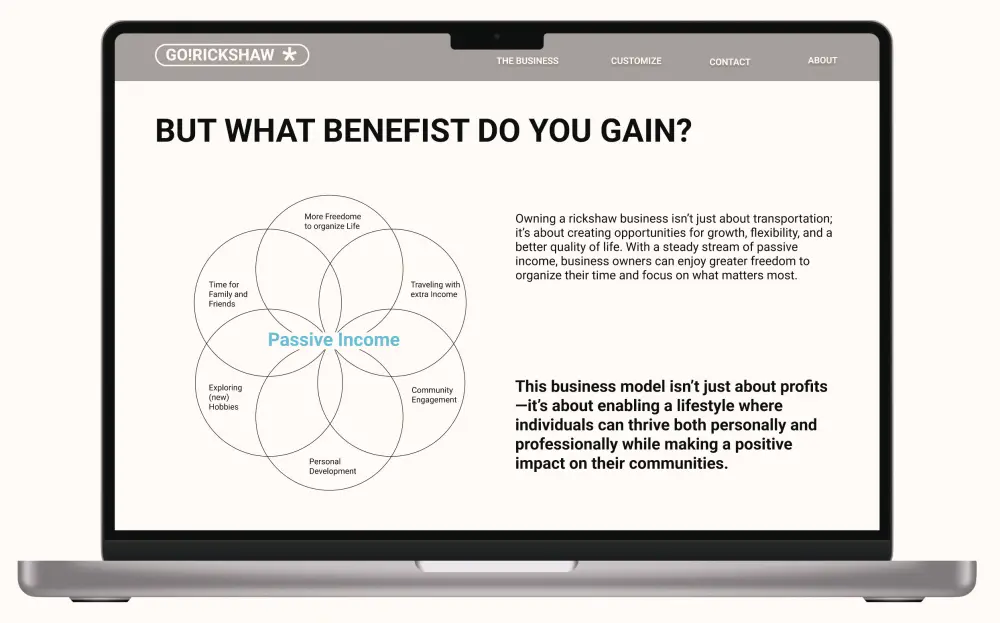
We combined this thought with a business model idea that not only changes the way mobility could look like, but also creates a passive income. A great opportunity and a new job perspective for many people who can build up a micro-business as a self-employed person, which at the same time offers a great economic benefit by solving mobility problems.
With this utopian idea, a mission statement was created that captures our goal in just one sentence: 'When underserved communities seek access to opportunities but face isolation, they will rely on our autonomous transport (business) system to connect seamlessly to the world, measured by affordable access, reliable connectivity, and sustainable integration.' With the idea in mind to create not just a ride, but a journey of connection and an experience for the world.
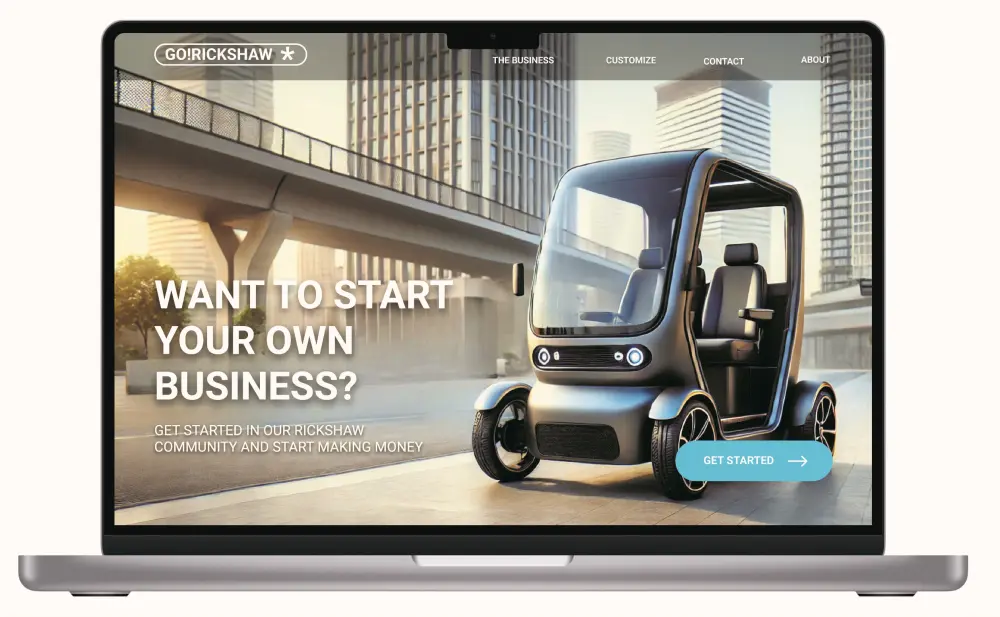
The final step in our Speculative Design process was to shape our ideas into a prototype. The idea behind this step was to create a vivid and tangible idea for a possible future. When we decided to investigate the rickshaw business model further, we created a website for this business model. This sets out the facts for the business model, the uniqueness and most importantly the benefits of this cultural transportation model. The final step, the creation of these prototypes, brought all the steps together and created a cohesive Speculative Design story.