
Coral Cultivation Research
Heat-Tolerant Breeding Program
Restored Reef Biodiversity
Public Awareness Campaign
Speculative Portal Prototype
In the year 2070, a surplus of corals in the world's oceans has boosted marine ecosystems and climate resilience, but created challenges for marine transport. This project introduces the CoralCollector2 (CC2) robot to manage growth and harvest corals. These harvested corals are then utilized as a rich source of nutrients and minerals to support human health.
Speculative Narrative
Imagine this future scenario: In the year 2070, the coral reefs have multiplied rapidly. There is now a surplus of corals in the world's oceans that have a positive impact on the reefs ecosystem, the fish industry and climate resilience. But the new quantity of corals can also lead to a disorder in the marine food chain and problems in the boating industry. How can the future society adapt to these new circumstances? To find out what the situation will look like in 2070, we first looked at the current situation and how we are dependent on the reefs.
Today, coral reefs are home to 25% of all marine species and act as natural carbon sinks, mitigating climate change. Many coastal communities are dependent on fishing and therefore on the coral reefs. They also attract millions of tourists annually for snorkeling, diving and beach activities. If the coral reefs were to die out, it would jeopardize many jobs and endanger the coastal regions and floodplains, as the reefs act as protection against storm surges.
During our research, we found some positive signals, like projects that point the way in the right direction. There is a small startup in Dubai that is pioneering efforts to combat climate change by cultivating heat-tolerant corals. The startup's mission is to rebuild damaged reefs and create more resilient marine ecosystems. If this project continues to make positive progress, it could lead to the rescue of many coral reefs. The second project we found is the World Surf League's One Ocean initiative. In cooperation with Coral Gardeners they held their third annual coral workshop in Teahupo'o, Tahiti. Local volunteers, kids from the Tahiti Iti Surf Club, and professional surfers participated in gardening corals together. Three years after the first coral workshop, this method has proven to work wonders. With this project they are recreating the foundation of one of the most biologically diverse ecosystems on the planet.
In order to continue working on our future scenario for 2070, we developed a persona. The name of our persona is Jonas Martins. He is 29 years old and lives with his family in Queensland, Australia. He works as a local eco-tourism guide and feels deeply connected to his home, the ocean and the reefs. When the Martins witnessed the ever-increasing destruction of the reefs, they decided to educate themselves about sustainable tourism workshops and grants through community meetings and online research. They evaluated different options for solar-powered boat engines and sustainable fishing practices, weighing the upfront costs against long-term benefits.
The family secured a grant to retrofit their boats with solar panels and enrolled in a workshop that educated them on reef-safe tourism practices. In addition to that, the Martins updated their tour marketing to emphasize their eco-friendly initiatives, drawing in a new segment of tourists who value sustainability. The family's ideas can be seen as a model for a new approach that attracts eco-conscious tourists, boosting revenue and giving them a sense of pride in contributing to reef conservation.
Having dealt with this persona, we now understand how people adapted their behavior to the dying reefs and thus managed to change the situation completely. In conclusion, we decided to take a positive perspective for the future and began to imagine life in the year 2070 with a surplus of corals. How would the people adapt to this new situation? Which new products are being invented and which new jobs would appear? We developed some artifacts that can better describe life in the year 2070. As the surplus of corals is a problem for boating in many places, a new profession has developed. There are now specially trained divers who harvest the excess coral to prevent reefs from growing too high. Due to the fragility of the reefs, large machines could potentially destroy them. The divers are trained to work with the CoralCollector2 (CC2), a coral-collecting-robot specially designed for this delicate job. It combines the latest technologies for precise, efficient work with minimal environmental impact. With its perfect fit for the coral harvesters, it boosts productivity, reduces labor costs and supports eco-friendly practices.
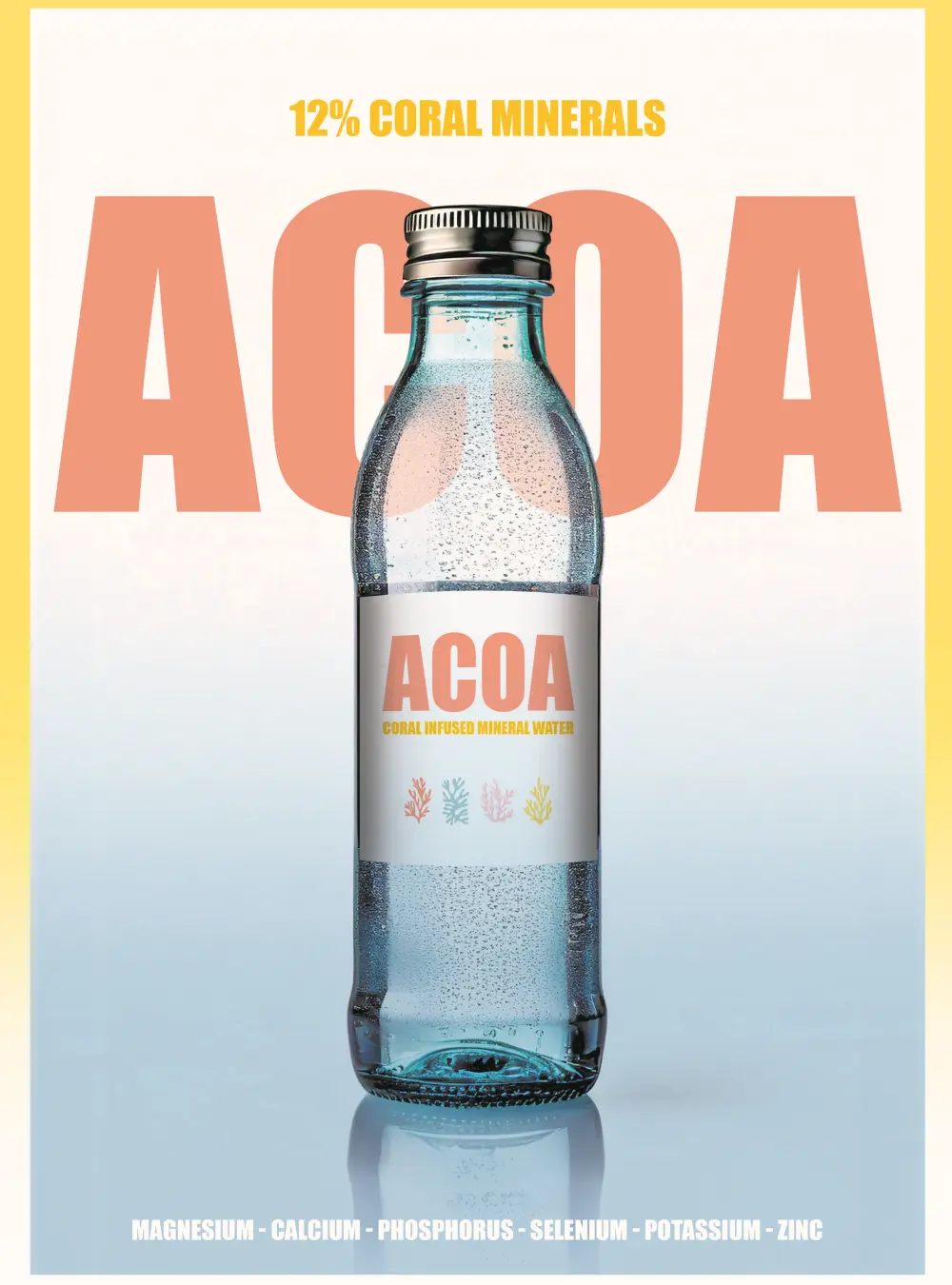
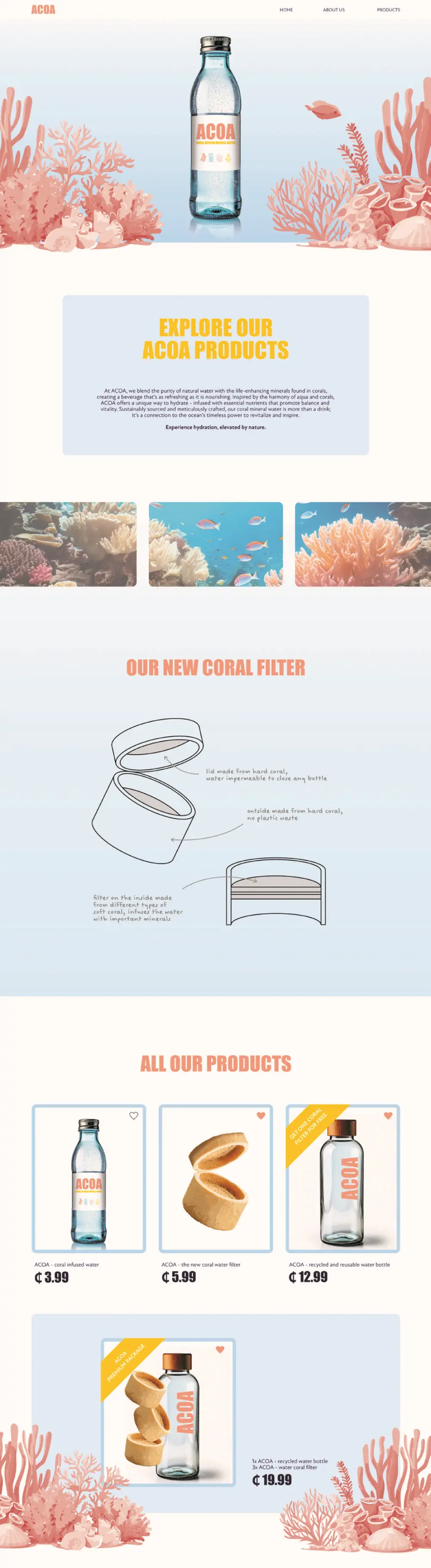
Now that we have developed this new job opportunity, there are a lot of harvested corals that can be put to good use. Many corals contain nutrients and minerals that are very important for human health, like magnesium, calcium, selenium and zinc. With this in mind, we developed ACOA. This company sells coral infused water, but also some other related products for coral-mineral-consumption. The best selling product is a filter that consists of 100% coral and fits on every water bottle. It can be used up to 100 times to supply the water with health-boosting nutrients, before the user has to replace it with a new one. As is already the case today, corals are also used in other areas of healthcare, for example to replicate bones and dental implants. Not a single bit of the harvested coral is wasted. Although they are now plentiful, they are still seen as a particularly important raw material that needs to be protected.
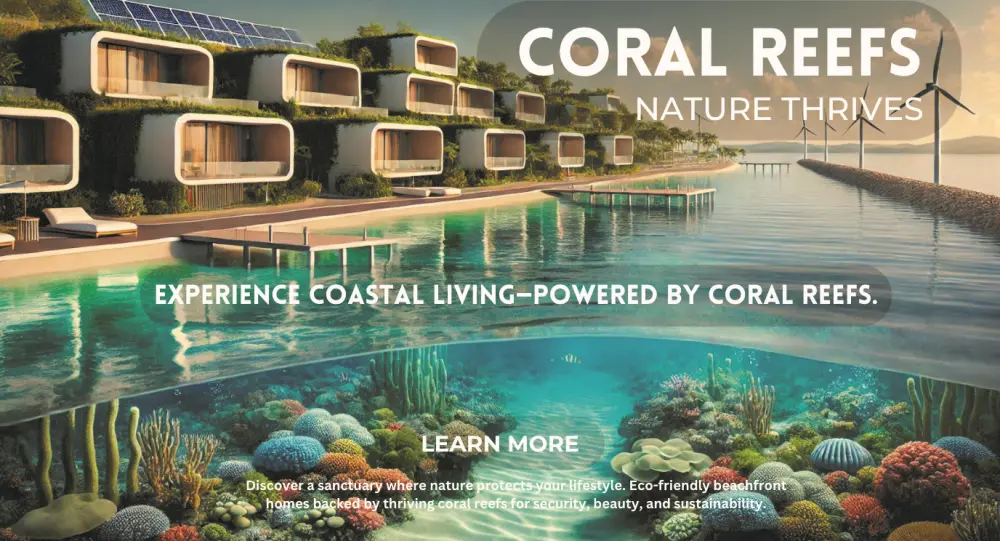
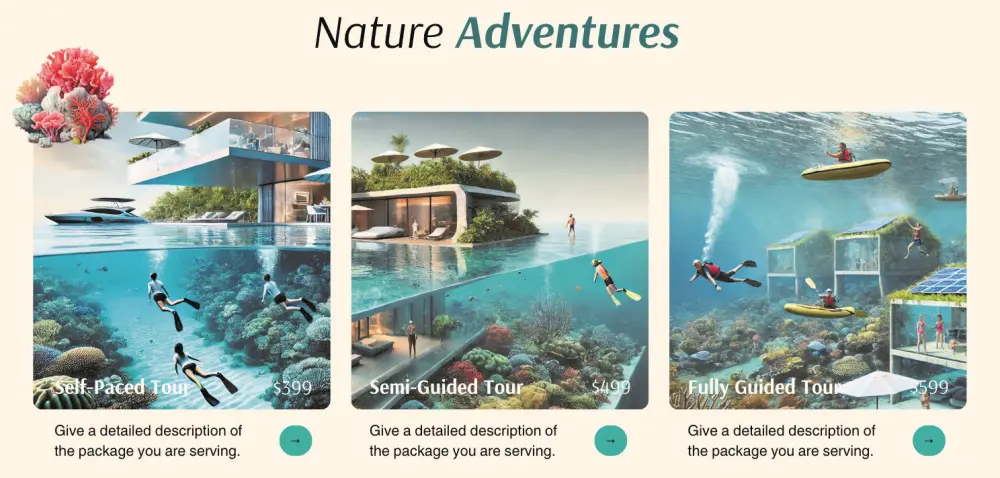
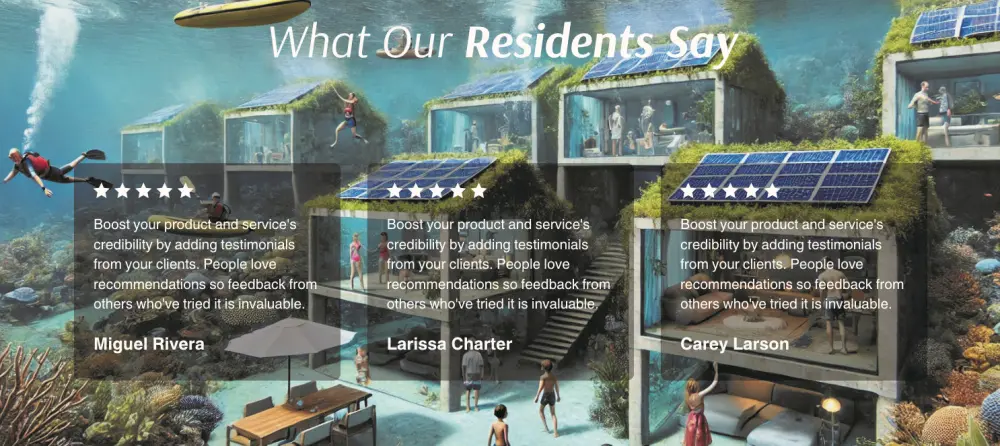
Now that people have a new way of dealing with corals, life on the coasts has also changed. We have developed Coral Bay Living, a place where your home becomes one with nature, the sea and the reef. The sustainable, modern buildings are powered entirely by solar and wind energy and are protected from flooding and storm surges by the offshore coral reef. The partially submerged buildings with their large windows offer breathtaking underwater views and incredible ocean experiences. With this sustainable way of living on the coast, we complete the big picture of life in 2070.
The artifacts we have developed should help us bring people today closer to the life we could achieve if we stop destroying the reefs and start protecting them. It's no coincidence that coral reefs are often called the rainforests of the ocean — their importance is far too great for us to overlook their destruction. Today it is up to all of us to work on this problem. First of all, we should promote sustainable consumption and support climate action. We need to raise awareness and educate ourselves and others about the reefs and their importance to our lives. Even children in school need to understand that not only life on the coast is dependent on the reefs, but also human health and medicine. To help the reefs recover from the damage of climate change, we have to support conservation projects and encourage more sustainable tourism in the future. Only by taking these measures can we truly succeed in reaching the year 2070 with everything we have envisioned.